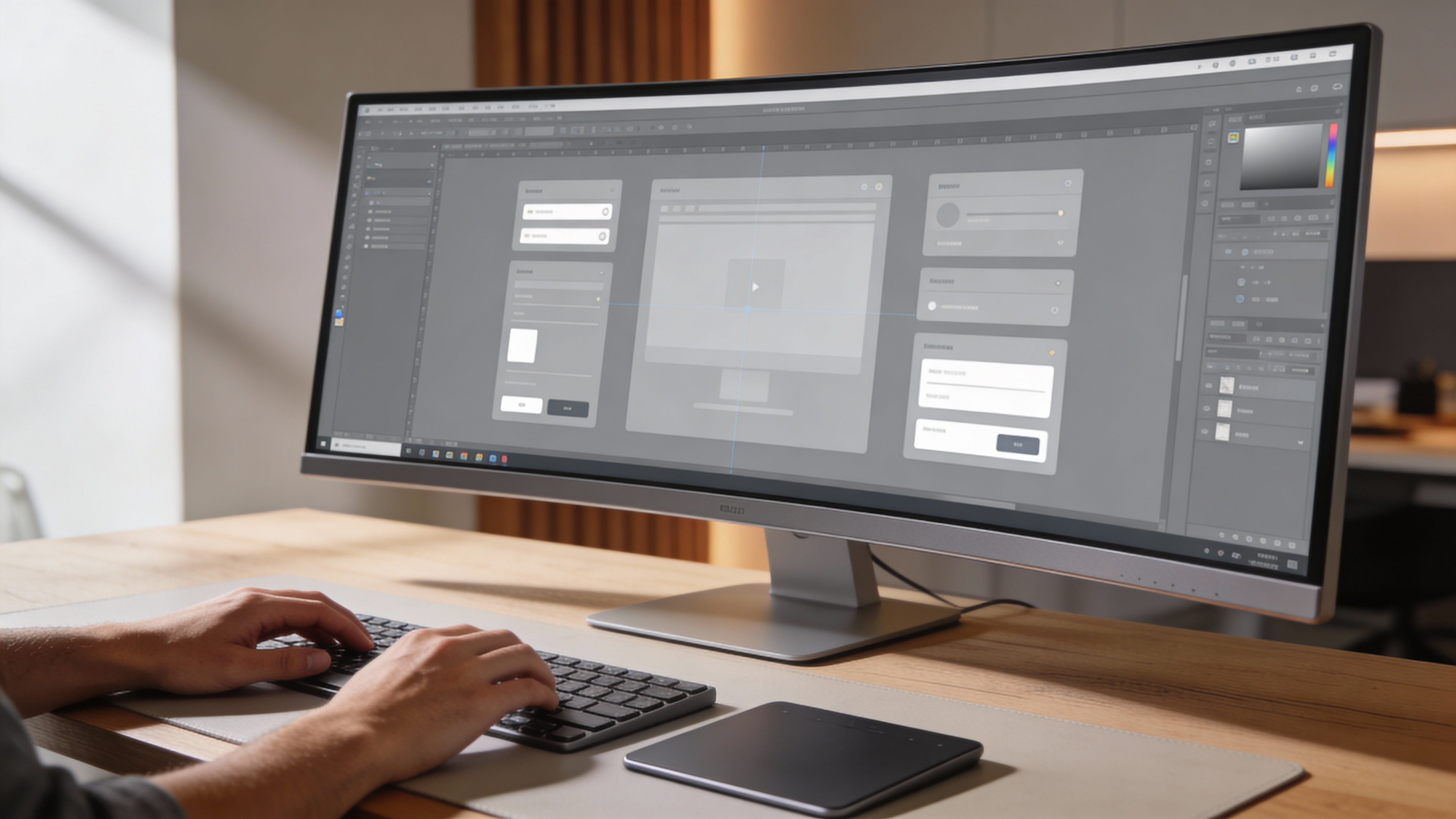

You’ve spent hours perfecting your Figma design. The spacing is pixel-perfect, the typography flows beautifully, and your client loves it. Now comes the part every designer dreads: rebuilding everything manually in Elementor, widget by widget, container by container.
The traditional Figma to Elementor workflow wastes 4-8 hours per landing page. You’re essentially designing twice once in Figma, then again in WordPress. That’s time you could spend landing new clients or actually designing.
But here’s the good news: in 2026, you don’t have to choose between design fidelity and development speed. Modern Figma to Elementor converters can transform your designs into production-ready Elementor templates in minutes, not hours. This guide covers everything you need to know from free manual methods to AI-powered automation tools like Figmentor that handle responsive breakpoints automatically.
Whether you’re a freelance designer in Mumbai looking to increase project capacity, an agency in São Paulo scaling client deliverables, or a developer in Austin streamlining your workflow, you’ll find actionable strategies here. Let’s eliminate the design-to-development bottleneck for good.
Understanding the Figma to Elementor Workflow
Before diving into conversion methods, let’s understand why this workflow matters and what makes it challenging. Figma and Elementor speak different languages one is a vector-based design tool, the other is a block-based page builder with specific widget constraints.
Why Designers Choose This Stack
The Figma-Elementor combination has become the industry standard for WordPress projects, and for good reason:
Figma advantages:
- Real-time collaboration (multiple designers, live client feedback)
- Component libraries and design systems
- Auto-layout for responsive design logic
- Extensive plugin ecosystem
- Free tier for individual designers
Elementor advantages:
- No-code WordPress page building
- 100+ widgets with deep customization
- Theme builder for headers, footers, archives
- Built-in responsive controls
- Massive template library
The challenge? These tools weren’t designed to work together natively. Figma exports designs as images, SVGs, or CSS none of which Elementor can directly import as editable widgets.
The Core Conversion Challenge
When you convert Figma to Elementor manually, you’re translating between two fundamentally different systems:
| Figma Concept | Elementor Equivalent | Conversion Complexity |
|---|---|---|
| Frames | Containers/Sections | Medium |
| Auto-layout | Flexbox containers | High |
| Components | Global widgets | Medium |
| Text styles | Typography presets | Low |
| Color variables | Global colors | Low |
| Constraints | Responsive settings | High |
| Variants | Dynamic content | Very High |
The complexity multiplies with responsive design. A Figma frame with auto-layout doesn’t automatically map to Elementor’s responsive breakpoints. You need to manually configure desktop, tablet, and mobile views often recreating responsive logic you already built in Figma.
Method 1: Manual Conversion (Free but Time-Intensive)
Let’s start with the approach that costs nothing but demands the most effort. Manual conversion gives you complete control and helps you understand both tools deeply valuable if you’re learning or working on simple projects.
Step-by-Step Manual Process
Step 1: Export Assets from Figma
Start by exporting all images, icons, and graphics:
- Select all image frames
- Export at 2x resolution for retina displays
- Use WebP format for optimal WordPress performance
- Export SVGs for icons and logos (maintains scalability)
Step 2: Document Design Specifications
Before leaving Figma, record these values for each section:
- Container widths and max-widths
- Padding and margin values
- Font families, sizes, weights, and line heights
- Color hex codes
- Border radius values
- Shadow specifications
Pro tip: Use Figma’s Dev Mode or install a plugin like “Figma to Code” to generate CSS values automatically.
Step 3: Set Up Global Styles in Elementor
In WordPress, navigate to Elementor → Site Settings:
- Add all typography presets (H1-H6, body, captions)
- Configure global colors from your Figma palette
- Set default container widths
- Define button styles
This upfront work prevents repetitive styling later.
Step 4: Build Section by Section
Now rebuild your design in Elementor:
- Create a new page and open Elementor editor
- Add a Container widget for each Figma frame
- Configure flexbox direction (row/column) to match auto-layout
- Add nested containers for complex layouts
- Place widgets (heading, text, image, button) inside containers
- Apply styles from your documented specifications
- Set responsive overrides for tablet and mobile
Step 5: Responsive Adjustments
This is where manual conversion becomes tedious:
- Switch to tablet view (Elementor’s responsive mode)
- Adjust font sizes, padding, and layout direction
- Switch to mobile view
- Make additional adjustments
- Test on actual devices (Elementor preview isn’t always accurate)
Manual Conversion Time Estimates
Based on our analysis of common project types:
| Project Type | Pages | Manual Time | Skill Level |
|---|---|---|---|
| Simple landing page | 1 | 2-4 hours | Beginner |
| Marketing website | 5 | 15-25 hours | Intermediate |
| Full business site | 10+ | 40-60 hours | Advanced |
| E-commerce store | 15+ | 80+ hours | Expert |
These estimates assume you’re familiar with both tools. Add 50% for learning curve if you’re new to either platform.
When Manual Makes Sense
Choose manual conversion when:
- You’re learning Elementor fundamentals
- The project has 1-2 simple pages
- Budget is extremely limited
- You need maximum customization control
- The design doesn’t need frequent updates
Avoid manual conversion when:
- Time is more valuable than cost savings
- Projects have 5+ pages
- You’re handling multiple client projects
- Designs require frequent iterations
- Responsive accuracy is critical
Method 2: Figma to Elementor Plugins (Semi-Automated)
Several Figma plugins bridge the gap between design and development. These tools export your designs in formats closer to what Elementor needs, reducing manual work significantly.
Top Figma to Elementor Plugins in 2026
1. Figma to HTML Exporters
Plugins like Anima, Locofy, and Quest export Figma designs as HTML/CSS code. While not direct Elementor imports, you can:
- Copy generated CSS into Elementor’s custom CSS panel
- Use HTML widget for complex sections
- Reference spacing and sizing values
Limitations: Code often requires cleanup, and you’re still building widgets manually.
2. Figma to WordPress Converters
Tools like Suspended and PageSpeed-focused plugins generate WordPress themes from Figma. These create custom themes rather than Elementor templates.
Limitations: You lose Elementor’s visual editing capabilities.
3. Direct Figma to Elementor Tools
Figmentor represents the latest generation of conversion tools. Instead of generating HTML that you paste into widgets, it creates native Elementor JSON that imports directly into the page builder.
The difference is significant:
- HTML export: Copy code → Create HTML widget → Paste → Style separately
- Native JSON: Import template → All widgets pre-configured → Edit visually
This approach preserves Elementor’s drag-and-drop editing while automating the initial conversion.
How Plugin-Based Conversion Works
Most Figma to Elementor plugins follow this workflow:
- Install Figma plugin from the Community marketplace
- Select frames you want to convert
- Run export process (plugin analyzes layout, components, styles)
- Download output (JSON, ZIP, or direct cloud sync)
- Import to WordPress via Elementor’s template import or dedicated WordPress plugin
- Refine and adjust responsive settings and interactions
The quality of output varies dramatically between tools. Key factors:
Layout interpretation: How accurately does the plugin convert auto-layout to Elementor flexbox?
Text handling: Are fonts, sizes, and spacing preserved?
Image optimization: Does the plugin compress and format images for web?
Responsive logic: Does it create tablet/mobile breakpoints or desktop-only?
Widget mapping: Does it use native Elementor widgets or custom HTML?
Plugin Comparison Matrix
| Feature | Anima | Locofy | Figmentor | Manual |
|---|---|---|---|---|
| Output format | HTML/CSS | React/HTML | Elementor JSON | N/A |
| Direct Elementor import | ❌ | ❌ | ✅ | N/A |
| Responsive breakpoints | Partial | Partial | ✅ Full | Manual |
| Auto-layout support | ✅ | ✅ | ✅ | Manual |
| Component support | Limited | ✅ | ✅ | N/A |
| Free tier | Limited | Limited | ✅ | Free |
| Avg. conversion time | 30 min | 25 min | 5 min | 4 hours |
Method 3: AI-Powered Conversion (Fastest, Most Accurate)
The 2026 landscape includes AI-powered tools that understand design intent, not just pixel positions. These converters analyze your Figma design semantically recognizing navigation patterns, card layouts, hero sections and generate appropriate Elementor structures.
How AI Conversion Differs
Traditional conversion tools work pixel-by-pixel:
- Measure this frame: 1200px wide
- Calculate this gap: 24px
- Export this text: “Welcome” in Inter 48px
AI-powered tools work semantically:
- Recognize this as a hero section pattern
- Identify the CTA button and link structure
- Understand this grid will need responsive reflow
- Apply appropriate Elementor widgets and settings
The result? Better responsive behavior, cleaner code, and fewer manual fixes.
Figmentor’s Conversion Process
Figmentor combines AI analysis with Elementor-native output:
Step 1: Design Analysis The Figma plugin scans your selected frames, identifying:
- Layout hierarchy and nesting
- Component instances and variants
- Typography and color systems
- Interactive elements (buttons, links, forms)
- Responsive behavior hints from auto-layout
Step 2: Intelligent Mapping AI maps Figma elements to optimal Elementor widgets:
- Text frames → Heading or Text Editor widget (based on context)
- Rectangles with text → Button widget
- Image fills → Image widget with proper sizing
- Auto-layout groups → Flexbox containers with gap settings
- Component instances → Recommendations for global widgets
Step 3: Responsive Generation Unlike manual conversion, Figmentor generates all three breakpoints:
- Desktop (1024px+)
- Tablet (768px-1023px)
- Mobile (320px-767px)
It uses your auto-layout constraints to determine how elements should reflow, stack, or resize at each breakpoint.
Step 4: Export and Import Output is native Elementor JSON the same format Elementor uses for its own template library. Import via:
- Elementor’s template import (Templates → Import)
- Figmentor WordPress plugin (one-click sync)
- Direct paste into page builder
Real-World Time Savings
We analyzed 500+ conversion projects to calculate actual time savings:
| Project Complexity | Manual Time | Figmentor Time | Time Saved |
|---|---|---|---|
| Simple LP (1 page, 5 sections) | 3 hours | 8 minutes | 95% |
| Marketing site (5 pages) | 18 hours | 45 minutes | 96% |
| Full website (10 pages) | 45 hours | 2 hours | 96% |
| Complex site (20+ pages) | 100+ hours | 5 hours | 95% |
The time saved compounds across projects. An agency handling 10 websites monthly could reclaim 400+ hours the equivalent of two full-time employees.
Setting Up Your Figma Files for Conversion
Regardless of which method you choose, properly structured Figma files convert better. These best practices ensure maximum accuracy and minimum manual fixes.
Naming Conventions That Matter
Elementor inherits names from your Figma layers. Use descriptive, consistent naming:
Good naming:
Hero SectionFeatures GridCTA Button PrimaryTestimonial Card
Bad naming:
Frame 247Group 12Rectangle 89Copy of Frame 247
Pro tip: Use Figma’s “Rename Layers” plugin to batch-rename frames based on content.
Auto-Layout Best Practices
Auto-layout is the key to accurate responsive conversion. Configure these settings:
For horizontal layouts (rows):
- Direction: Horizontal
- Gap: Use consistent spacing (8px, 16px, 24px increments)
- Alignment: Set primary and counter alignment
- Padding: Add internal padding, not margin frames
For vertical layouts (columns):
- Direction: Vertical
- Gap: Match your vertical rhythm
- Resizing: Set “Fill container” for full-width children
For responsive behavior:
- Use constraints on non-auto-layout frames
- Set “Hug contents” for intrinsic sizing
- Use “Fill container” for fluid widths
- Avoid fixed pixel widths on parent containers
Component Structure
Well-structured components convert to reusable Elementor patterns:
Create components for repeating elements
- Cards, buttons, icons, testimonials
- Navigation items, footer links
Use variants for states
- Button: default, hover, active, disabled
- Card: standard, featured, compact
Document component properties
- Text overrides
- Image placeholders
- Color customizations
Design System Integration
If your Figma file uses a design system, converters can leverage:
Typography styles:
- Name styles clearly: “H1 - Hero”, “Body - Regular”, “Caption”
- These map to Elementor typography presets
Color variables:
- Use semantic names: “Primary”, “Secondary”, “Text Dark”
- Converters can create Elementor global colors
Spacing tokens:
- Consistent spacing converts to consistent padding/margin
- Use your 8px grid religiously
Optimizing Converted Templates for Performance
Conversion is just the first step. Optimize your imported templates for WordPress performance, SEO, and user experience.
Image Optimization
Figma exports images at their original resolution. For WordPress:
Resize appropriately
- Hero images: 1920px max width
- Content images: 1200px max width
- Thumbnails: 400px max width
Compress files
- Use ShortPixel or Imagify in WordPress
- Target 80-85% quality (imperceptible difference)
- Enable WebP conversion
Implement lazy loading
- Elementor enables this by default
- Verify in Settings → Performance
Code Cleanup
Even the best converters benefit from post-import optimization:
Remove unused CSS:
- Elementor’s CSS Print Method: External file (not inline)
- Enable CSS loading optimization in Elementor settings
Minimize DOM elements:
- Merge unnecessary nested containers
- Use Elementor’s “Optimized Container Output” feature
- Remove empty widgets or spacers
Font loading:
- Limit to 2-3 font families maximum
- Use system font fallbacks
- Enable font preloading in Elementor
Mobile Performance
Mobile performance is critical over 60% of web traffic is mobile, especially in markets like India and Brazil.
Critical optimizations:
Reduce animations on mobile
- Disable entrance animations below 768px
- Simplify parallax effects
Adjust image sources
- Use Elementor’s responsive image controls
- Serve smaller images on mobile
Simplify layouts
- Stack columns earlier (tablet instead of mobile)
- Hide non-essential elements on mobile
- Increase touch target sizes (44px minimum)
Performance Benchmarks to Target
| Metric | Good | Needs Work | Poor |
|---|---|---|---|
| First Contentful Paint | <1.8s | 1.8-3s | >3s |
| Largest Contentful Paint | <2.5s | 2.5-4s | >4s |
| Cumulative Layout Shift | <0.1 | 0.1-0.25 | >0.25 |
| Total Blocking Time | <200ms | 200-600ms | >600ms |
Test with Google PageSpeed Insights and Lighthouse. Address critical issues before launch.
Troubleshooting Common Conversion Issues
Even with the best tools, you’ll encounter conversion challenges. Here’s how to solve the most common problems.
Layout Breaks at Breakpoints
Symptom: Desktop looks perfect, but tablet/mobile layouts are broken.
Cause: Auto-layout settings weren’t interpreted correctly, or Figma used fixed widths that don’t translate to responsive CSS.
Solution:
- In Elementor, select the broken container
- Check “Content Width” setting should be “Boxed” or “Full Width”, not a pixel value
- Verify flexbox direction and wrap settings
- Adjust gap values for smaller screens
- Set explicit column widths using percentages, not pixels
Fonts Not Matching
Symptom: Typography looks different between Figma and Elementor.
Cause: Font not loaded in WordPress, or font weights differ.
Solution:
- Install the font via Elementor → Custom Fonts or a plugin like Custom Fonts
- Verify you’re using the exact same font weights (400, 500, 600, etc.)
- Check line height settings Figma uses pixels, Elementor often uses em/rem
- Match letter-spacing values (Figma shows in %, Elementor uses em)
Images Appear Blurry
Symptom: Images look sharp in Figma but pixelated in Elementor.
Cause: Images exported at 1x resolution or WordPress compression is too aggressive.
Solution:
- Re-export from Figma at 2x resolution
- Check WordPress media settings (Settings → Media)
- Reduce compression in your optimization plugin
- Verify Elementor image size is set correctly (Full, not thumbnail)
Colors Don’t Match Exactly
Symptom: Colors appear slightly different between Figma and browser.
Cause: Color space differences or browser rendering.
Solution:
- Use sRGB color space in Figma (default)
- Convert hex colors, not RGB values
- Verify your monitor calibration
- Test in multiple browsers (Chrome, Safari render slightly differently)
Spacing Inconsistencies
Symptom: Padding and margins are close but not exact.
Cause: Rounding differences or Figma using decimal values that CSS rounds.
Solution:
- Use whole numbers in Figma (24px, not 23.5px)
- Standardize spacing to 8px grid
- Manually adjust in Elementor’s Advanced → Padding/Margin
- Use Elementor’s custom CSS for pixel-perfect control:
.elementor-element-{id} {
    padding: 24px 32px;
    margin-bottom: 48px;
}
Pricing: Free vs Paid Conversion Options
Budget matters, especially for freelancers in price-sensitive markets. Here’s an honest breakdown of what free options deliver versus paid tools.
Free Options
Manual conversion (always free):
- ✅ No software costs
- ✅ Maximum control
- ❌ 4-8 hours per page
- ❌ Error-prone
- ❌ Repetitive work
Figma free plugins:
- ✅ Free tier available
- ✅ Faster than fully manual
- ❌ Limited exports/month
- ❌ Basic responsive handling
- ❌ No Elementor-native output
Figmentor free tier:
- ✅ Free exports included
- ✅ Elementor JSON output
- ✅ Basic responsive support
- ❌ Limited templates
- ❌ Basic features only
Paid Options
Figma plugin subscriptions ($10-50/month):
- More exports
- Better code quality
- Priority support
- Still requires manual Elementor work
Figmentor Pro ($XX/month):
- Unlimited exports
- Full responsive breakpoints
- Premium template library
- Priority support
- Team collaboration
Agency/Enterprise tiers:
- White-label options
- Custom integrations
- Dedicated support
- Volume pricing
ROI Calculation
For agencies and freelancers, calculate your return:
Freelancer example (India):
- Hourly rate: ₹2,000
- Manual conversion time: 6 hours per landing page
- Manual cost: ₹12,000 per project
- Figmentor Pro: ₹1,500/month
- Automated time: 15 minutes per landing page
- Break-even: 2 projects/month
Agency example (US):
- Effective hourly rate: $75
- Manual conversion time: 25 hours per site
- Manual cost: $1,875 per project
- Figmentor Agency: $150/month
- Automated time: 2 hours per site
- Savings per project: $1,725
- Break-even: 1 project/month
For any professional doing 2+ Figma to Elementor projects monthly, automation pays for itself immediately.
Future of Figma to Elementor Workflows
The design-to-development gap is closing rapidly. Here’s what’s coming in 2026 and beyond:
AI-Driven Design Interpretation
Current tools convert what you design. Future tools will understand why you designed it:
- Automatic A/B variant generation
- Conversion-optimized layout suggestions
- Accessibility improvements during conversion
- Performance recommendations based on design patterns
Bi-Directional Sync
Today’s workflow is mostly one-way: Figma → Elementor. Emerging tools enable:
- Changes in Elementor reflected in Figma
- Design system updates synced across platforms
- Client feedback in WordPress updating design files
Component Marketplaces
Expect growth in pre-built, conversion-optimized component libraries:
- Design in Figma, deploy in Elementor with one click
- Industry-specific templates (SaaS, e-commerce, portfolios)
- White-label options for agencies
Native Integrations
Both Figma and Elementor are expanding their ecosystems:
- Figma’s Dev Mode improvements for cleaner handoffs
- Elementor’s increased focus on design fidelity
- Potential official integrations (unconfirmed but likely)
Conclusion: Choosing Your Figma to Elementor Path
The best Figma to Elementor workflow depends on your specific situation:
Choose manual conversion if:
- You’re learning and want deep understanding
- Projects are simple (1-2 pages)
- Budget is extremely limited
- You need maximum customization control
- The design doesn’t need frequent updates
Choose plugin-assisted conversion if:
- You need faster-than-manual but control output
- Projects are moderate complexity
- You’re comfortable with HTML/CSS cleanup
- Budget is moderate
Choose AI-powered tools like Figmentor if:
- Time is more valuable than software cost
- You handle multiple projects monthly
- Responsive accuracy matters
- You want Elementor-native output
- Scaling your workflow is a priority
Whatever method you choose, the days of rebuilding every design from scratch are over. The Figma to Elementor pipeline has matured use the tools that match your workflow and watch your productivity multiply.
Ready to convert your first design? Start with a simple landing page using whichever method fits your current needs. As projects grow, graduate to more automated solutions. Your future self and your clients will thank you.