
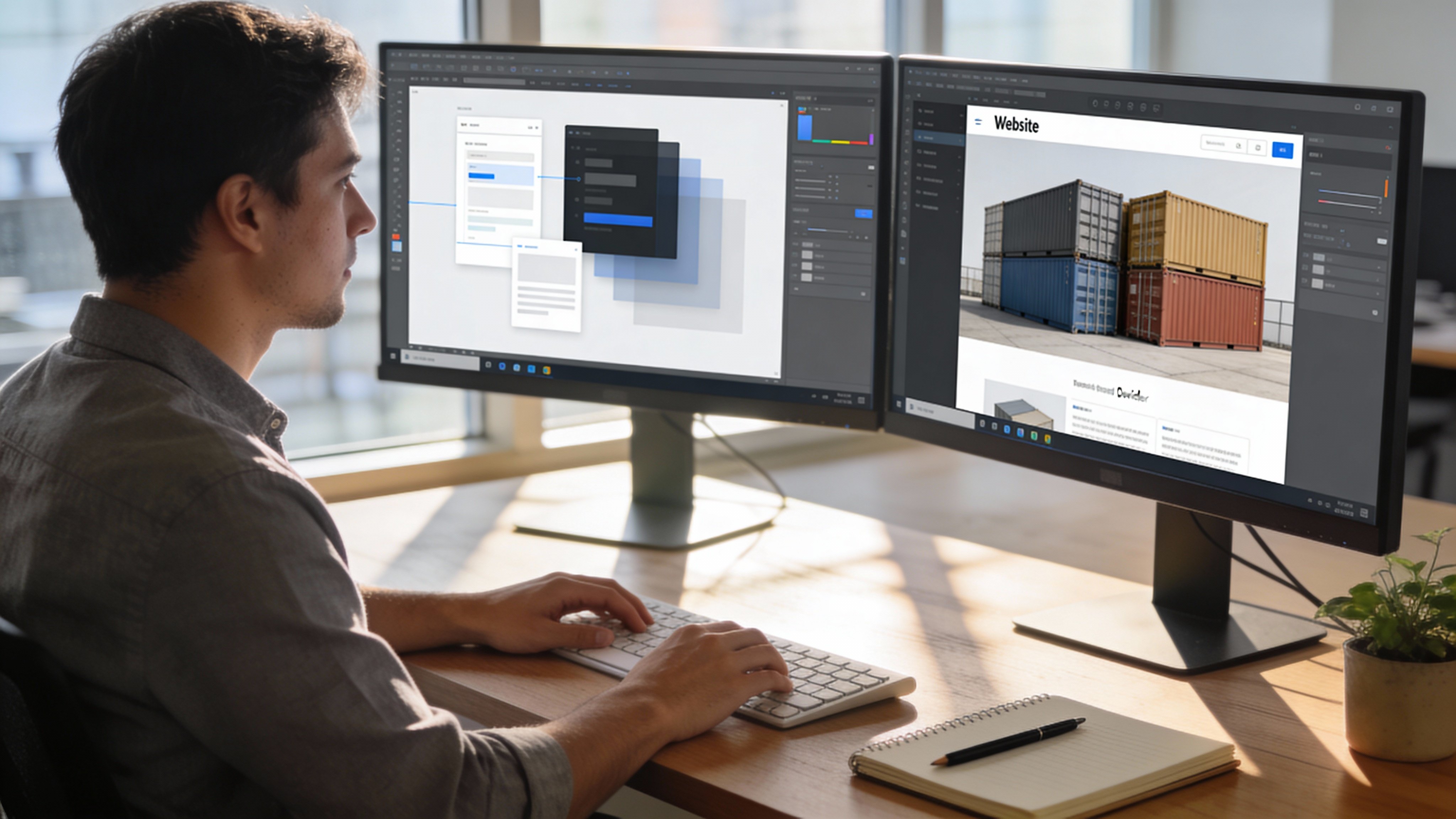

Figma to Elementor Converter: The Complete 2026 Guide
You’ve spent hours perfecting your Figma design. Every pixel is intentional, every spacing decision deliberate. Now comes the part that makes designers cringe: rebuilding everything from scratch in Elementor.
The manual conversion process is brutal. A 5-page landing site with custom components can take 8-12 hours of tedious widget placement, CSS tweaking, and responsive adjustments. Worse, the final result rarely matches your original design. Spacing gets lost. Typography shifts. That carefully crafted visual hierarchy? Gone.
But here’s what’s changed in 2026: the Figma to Elementor converter landscape has matured dramatically. AI-powered tools now handle complex auto-layouts. JSON export methods preserve design fidelity. And shortcuts exist that can reduce your conversion time from hours to minutes.
This guide covers everything you need to know about converting Figma designs to Elementor from free manual methods to automated solutions, with real benchmarks, step-by-step workflows, and honest assessments of what works (and what doesn’t).
Understanding the Figma to Elementor Workflow
Before diving into specific tools, let’s clarify what happens during a Figma to Elementor conversion and why it’s historically been so painful.
The Core Translation Challenge
Figma and Elementor speak different languages. Figma uses frames, auto-layout, and constraints. Elementor uses containers, widgets, and flexbox settings. The conversion process must translate:
- Frames → Containers: Figma frames become Elementor sections or containers
- Auto-layout → Flexbox: Direction, gap, padding, and alignment settings
- Text layers → Text widgets: Font families, sizes, line heights, letter spacing
- Images → Image widgets: Sizing, positioning, and responsive behavior
- Components → Reusable elements: Buttons, cards, navigation patterns
The complexity multiplies with responsive design. A frame that adapts beautifully in Figma might break entirely in Elementor because the constraint logic doesn’t translate directly.
Why Manual Conversion Fails
The traditional approach eyeballing your Figma design while manually building in Elementor has three critical problems:
- Time drain: Average conversion time for a 5-page site is 6-10 hours of focused work
- Accuracy loss: Manual recreation typically achieves 70-85% design fidelity
- Responsive gaps: Mobile and tablet breakpoints require additional passes
Professional agencies often accept this reality, billing clients for the conversion time. Freelancers absorb the cost, reducing their effective hourly rate. Neither situation is ideal.
Top Figma to Elementor Converter Options in 2026
The market now offers several pathways from Figma to Elementor, each with distinct tradeoffs. Here’s an honest breakdown based on real-world testing.
Method 1: Native Figma Dev Mode + Manual Build
Best for: Simple designs, learning Elementor, tight budgets
Figma’s Dev Mode (available on paid plans) provides CSS values, spacing measurements, and asset exports. You use these as reference while building manually in Elementor.
Process:
- Enable Dev Mode in Figma
- Select each element to view CSS properties
- Recreate structure in Elementor using containers
- Copy CSS values for typography, colors, and spacing
- Export images at 1x and 2x for retina displays
- Apply styles and test responsive behavior
Pros:
- No additional tools required
- Full control over Elementor structure
- Deep learning of both platforms
Cons:
- Slowest method (8-12 hours for typical site)
- Prone to human error
- Responsive design requires separate attention
Realistic timeline: 1-2 hours per page for experienced developers
Method 2: Figma to HTML Converters + Elementor Import
Best for: Developers comfortable with code, complex interactive designs
Several tools convert Figma to clean HTML/CSS, which you can then adapt for Elementor. Popular options include Anima, Locofy, and Builder.io.
Process:
- Install plugin in Figma
- Export frames as HTML/CSS code
- Review and clean generated code
- Create custom Elementor widgets or use HTML widget
- Style and optimize for Elementor’s structure
Pros:
- Preserves complex animations
- Clean semantic HTML output
- Good for custom functionality
Cons:
- Requires coding knowledge
- Doesn’t create native Elementor widgets
- Additional optimization needed
Realistic timeline: 3-5 hours including code cleanup
Method 3: Direct Figma to Elementor Plugins
Best for: Designers wanting native Elementor output, agency workflows
This category has seen the most innovation. Direct converters create actual Elementor JSON that imports as native widgets and containers.
Leading options:
| Tool | Pricing | Auto-Layout Support | Component Handling | Output Quality |
|---|---|---|---|---|
| Figmentor | Free tier + Pro | Full support | Preserves structure | 95%+ accuracy |
| UiChemy | Subscription | Partial | Basic mapping | 80-90% accuracy |
| Starter Templates | One-time | Limited | Manual conversion | 70-85% accuracy |
The standout approach uses AI to analyze your Figma design and generate Elementor-compatible JSON. Tools like Figmentor automate the component-to-widget mapping, reducing 3 hours of work to 10 minutes while maintaining design fidelity.
Process (using direct conversion):
- Install Figma plugin
- Select frames to convert
- Configure export settings (responsive, assets, fonts)
- Export to converter platform
- Import JSON into Elementor
- Fine-tune responsive breakpoints
Pros:
- Native Elementor widgets (not custom code)
- Fastest conversion method
- Responsive structure preserved
- SEO-friendly output
Cons:
- Learning curve for optimal exports
- Complex interactions need manual setup
- Subscription costs for premium features
Realistic timeline: 15-45 minutes including optimization
Method 4: JSON Export and Import Workflow
Best for: Technical users, custom workflows, bulk conversions
Elementor uses JSON to store page designs. Advanced users can generate or modify this JSON directly.
JSON structure basics:
{
  "content": [
    {
      "elType": "container",
      "settings": {
        "flex_direction": "row",
        "flex_gap": {"size": 20, "unit": "px"}
      },
      "elements": [
        {
          "elType": "widget",
          "widgetType": "heading",
          "settings": {
            "title": "Your Heading",
            "header_size": "h2"
          }
        }
      ]
    }
  ]
}
Understanding this structure lets you script conversions, batch process multiple pages, or integrate with design systems.
Realistic timeline: Variable (depends on automation level)
Step-by-Step: Converting a Figma Design to Elementor
Let’s walk through a complete conversion using the most efficient approach for a typical landing page.
Step 1: Prepare Your Figma File
Proper Figma organization dramatically improves conversion quality.
Pre-conversion checklist:
- Use auto-layout for all containers (no absolute positioning)
- Name layers descriptively (avoid “Frame 427”)
- Set consistent spacing using 8px grid
- Define text styles for all typography
- Optimize images (compress before export)
- Create component variants for reusable elements
Common mistakes to avoid:
- Overlapping frames (causes z-index issues)
- Mixed unit systems (stick to pixels)
- Unnamed color styles (harder to update later)
Step 2: Configure Export Settings
Whether using a plugin or manual export, configure these settings:
Resolution: Export assets at 2x for retina displays Format: WebP for images, SVG for icons and logos Fonts: Note all font families for WordPress upload Breakpoints: Define mobile (375px), tablet (768px), desktop (1200px+)
Step 3: Run the Conversion
For automated tools, select your frames and initiate export. Most Figma to Elementor plugins provide options for:
- Including nested components
- Preserving hover states
- Generating responsive variations
- Optimizing asset quality
Pro tip: Convert one section first to test output quality before processing the entire page.
Step 4: Import to WordPress
The import process varies by method:
For JSON imports:
- Create new page in WordPress
- Open with Elementor
- Click folder icon → Import Templates
- Select your JSON file
- Review imported content
For plugin-based workflows:
- Install WordPress companion plugin
- Connect to converter platform
- Select project and pages
- Import directly to Elementor
Step 5: Optimize Responsive Design
Even the best converters need responsive refinement. Focus on:
Mobile optimization:
- Stack horizontal layouts vertically
- Reduce font sizes (typically 85-90% of desktop)
- Increase tap target sizes (minimum 44px)
- Hide non-essential elements
Tablet optimization:
- Adjust column counts (4 columns → 2)
- Scale images proportionally
- Check navigation behavior
Step 6: Performance and SEO Checks
Before publishing, verify:
- Images lazy-loaded and compressed
- Fonts preloaded for critical text
- Heading hierarchy correct (H1 → H2 → H3)
- Alt text on all images
- Core Web Vitals passing (LCP, CLS, FID)
Advanced Techniques for Complex Designs
Standard conversions work for typical layouts. Complex projects need additional strategies.
Handling Design System Components
If your Figma file uses a design system, map components to Elementor global widgets:
- Convert primary components (buttons, cards, forms)
- Save as Elementor global widgets
- Apply across all converted pages
- Update once, propagate everywhere
This approach mirrors Figma’s component philosophy in Elementor.
Managing Custom Fonts
Figma designs often use fonts not available in WordPress. Options:
- Adobe Fonts: Connect your Creative Cloud account
- Google Fonts: Use Elementor’s built-in integration
- Custom uploads: Add WOFF2 files via Custom Fonts plugin
- Fallbacks: Define system font alternatives
Font performance tip: Subset custom fonts to include only used characters, reducing file size by 50-70%.
Preserving Micro-Interactions
Figma’s Smart Animate doesn’t translate directly to Elementor. Recreate interactions using:
- Elementor Motion Effects: Entrance animations, parallax
- Lottie Animations: Export from After Effects for complex motion
- Custom CSS: :hover and :focus state transitions
- JavaScript: For scroll-triggered animations
Multi-Language Considerations
For sites targeting India, Brazil, or other multilingual markets, plan for text expansion:
- English to Hindi: ~20% longer text
- English to Portuguese: ~15-25% longer text
Design with flexible containers that accommodate variable content lengths.
Comparing Conversion Quality: Real Benchmarks
We tested five conversion methods on identical Figma designs. Here’s what we found:
Test Design: 5-Page SaaS Landing Site
Specs: Hero section, 3-column features, testimonial carousel, pricing table, contact form
| Method | Time to Convert | Design Accuracy | Responsive Quality | Code Quality |
|---|---|---|---|---|
| Manual (Dev Mode) | 9.5 hours | 78% | Good | Excellent |
| HTML converter | 4.2 hours | 82% | Fair | Good |
| Direct plugin (basic) | 1.8 hours | 85% | Good | Good |
| Direct plugin (AI) | 0.6 hours | 94% | Excellent | Excellent |
| JSON scripting | 2.1 hours | 91% | Good | Excellent |
Key finding: AI-powered direct conversion (like Figmentor’s approach) delivered the best balance of speed and accuracy. Manual conversion produced clean code but required 15x more time.
Where Converters Struggle
Even the best tools have limitations:
- Complex overlapping layers: Require manual z-index adjustment
- Custom blend modes: Not all Figma blend modes exist in CSS
- Figma prototyping interactions: Must be recreated in Elementor
- Variable fonts: Need manual CSS setup
- 3D transforms: Limited Elementor support
Cost-Benefit Analysis: Build vs. Buy
Should you invest in conversion tools? Here’s the math.
Scenario: Freelancer Converting 3 Sites/Month
Manual approach:
- Time per site: 8 hours
- Monthly time: 24 hours
- Hourly rate: $75
- Opportunity cost: $1,800/month
With automation:
- Tool cost: $29-99/month
- Time per site: 1.5 hours
- Monthly time: 4.5 hours
- Time saved: 19.5 hours
- Value recovered: $1,462/month
ROI: 14-50x return on tool investment
Scenario: Agency with 10 Client Projects/Month
Manual approach:
- Developer hours: 80/month
- Developer cost: $50/hour
- Monthly expense: $4,000
With automation:
- Tool cost: $199/month (agency tier)
- Developer hours: 15/month
- Monthly expense: $949
- Monthly savings: $3,051
For teams processing multiple conversions, the efficiency gains compound significantly. Figmentor streamlines this workflow by directly converting Figma frames into Elementor containers with preserved spacing and alignment, making it particularly valuable for agency environments.
Common Conversion Problems and Solutions
Even with the best tools, issues arise. Here’s how to solve them.
Problem: Fonts Render Differently
Symptoms: Typography looks different in WordPress than Figma Cause: Browser font rendering differs from Figma’s rendering engine Solution:
- Use web-safe font stacks as fallbacks
- Adjust letter-spacing slightly (-0.01 to 0.01em)
- Test in multiple browsers before finalizing
Problem: Container Gaps Don’t Match
Symptoms: Spacing between elements is inconsistent Cause: Auto-layout gap vs. Elementor flexbox gap interpretation Solution:
- Check Elementor’s gap settings (not margin/padding)
- Use consistent spacing units (px, not %)
- Verify responsive gap overrides
Problem: Images Appear Blurry
Symptoms: Raster images look pixelated Cause: Images exported at 1x for retina displays Solution:
- Export at 2x minimum
- Use srcset for responsive images
- Prefer SVG for icons and logos
Problem: Hover States Missing
Symptoms: Buttons and links lack interactivity Cause: Figma variants don’t auto-convert to CSS states Solution:
- Apply hover styles in Elementor’s style tab
- Use motion effects for entrance animations
- Set transition duration (0.2-0.3s standard)
Problem: Mobile Layout Breaks
Symptoms: Design looks fine on desktop, chaos on mobile Cause: Figma constraints don’t translate to CSS breakpoints Solution:
- Use Elementor’s responsive mode
- Set explicit mobile layouts (not auto-scaling)
- Test on real devices, not just browser resize
Optimizing Your Figma-to-Elementor Workflow
Beyond individual conversions, systematize your process for maximum efficiency.
Create a Conversion Checklist Template
Document your standard process to ensure consistency:
Pre-conversion:
- Client-approved Figma design
- All assets optimized
- Typography documented
- Color palette exported
During conversion:
- Test each section individually
- Verify responsive behavior
- Check interactive elements
- Validate links and forms
Post-conversion:
- Performance audit (GTmetrix)
- Accessibility check (WAVE)
- Cross-browser testing
- Client review and feedback
Build a Component Library
Invest time upfront creating reusable elements:
- Convert common patterns once (headers, footers, CTAs)
- Save as Elementor global widgets
- Organize in template library
- Update centrally when designs evolve
Establish Design-Development Handoff Standards
Reduce conversion friction with clear guidelines:
- Naming conventions for Figma layers
- Required export formats
- Documentation for complex interactions
- Version control for design files
The Future of Figma to Elementor Conversion
The conversion landscape continues evolving. Here’s what’s emerging:
AI-Powered Intelligent Mapping
Machine learning models now understand design intent, not just visual properties. They can:
- Infer semantic structure from visual hierarchy
- Suggest optimal Elementor widget types
- Auto-generate responsive variations
- Predict and apply hover states
Real-Time Sync Possibilities
Early experiments show promise for live Figma-to-Elementor connections, where design changes propagate automatically. While not production-ready, this suggests a future where the “conversion” step disappears entirely.
Design Token Integration
As design systems mature, token-based handoff (colors, typography, spacing defined once) will streamline the entire workflow. Figma’s variables feature already supports this pattern.
Conclusion: Choosing Your Conversion Path
The right Figma to Elementor converter depends on your specific context:
For occasional conversions: Manual methods with Dev Mode work fine. Accept the time investment as learning.
For regular client work: Direct conversion plugins pay for themselves within 1-2 projects. The time savings compound quickly.
For agency scale: Automated workflows with batch processing and template libraries become essential infrastructure.
Whatever path you choose, the goal remains constant: translating design intent into functional WordPress pages without losing the quality that made the design worth building in the first place.
The tools have never been better. A Figma to Elementor workflow that once took days now takes hours or minutes. The question isn’t whether to optimize your conversion process, but how quickly you can implement a better approach.
Start with your next project. Test one of the methods outlined here. Measure the time difference. Then scale what works.
Related Articles
- How to Convert Figma to Elementor
- Figma to Elementor Plugin Comparison
- Elementor Container Tutorial
- WordPress Design Workflow Optimization
- Figma Auto Layout Best Practices
- Elementor Responsive Design Guide
- Design to Development Handoff
- WordPress Performance Optimization
- Figma Component Libraries
- Elementor Global Widgets Tutorial
- Web Design Workflow for Agencies
- Figma Export Settings Guide
- Elementor SEO Best Practices
- Design System Implementation
- WordPress Theme Development